 Skip to main content


 9.95
9.95Story Archive
Completed DungeonEasydesert- Schedule
- daily:2026-07-16
- Boss
- Obelisk Glass-Sand Pharaoh
- Entries
- 10
- Opens
- Jul 16, 2026, 12:00 AM UTC
- Closes
- Jul 16, 2026, 11:59 PM UTC
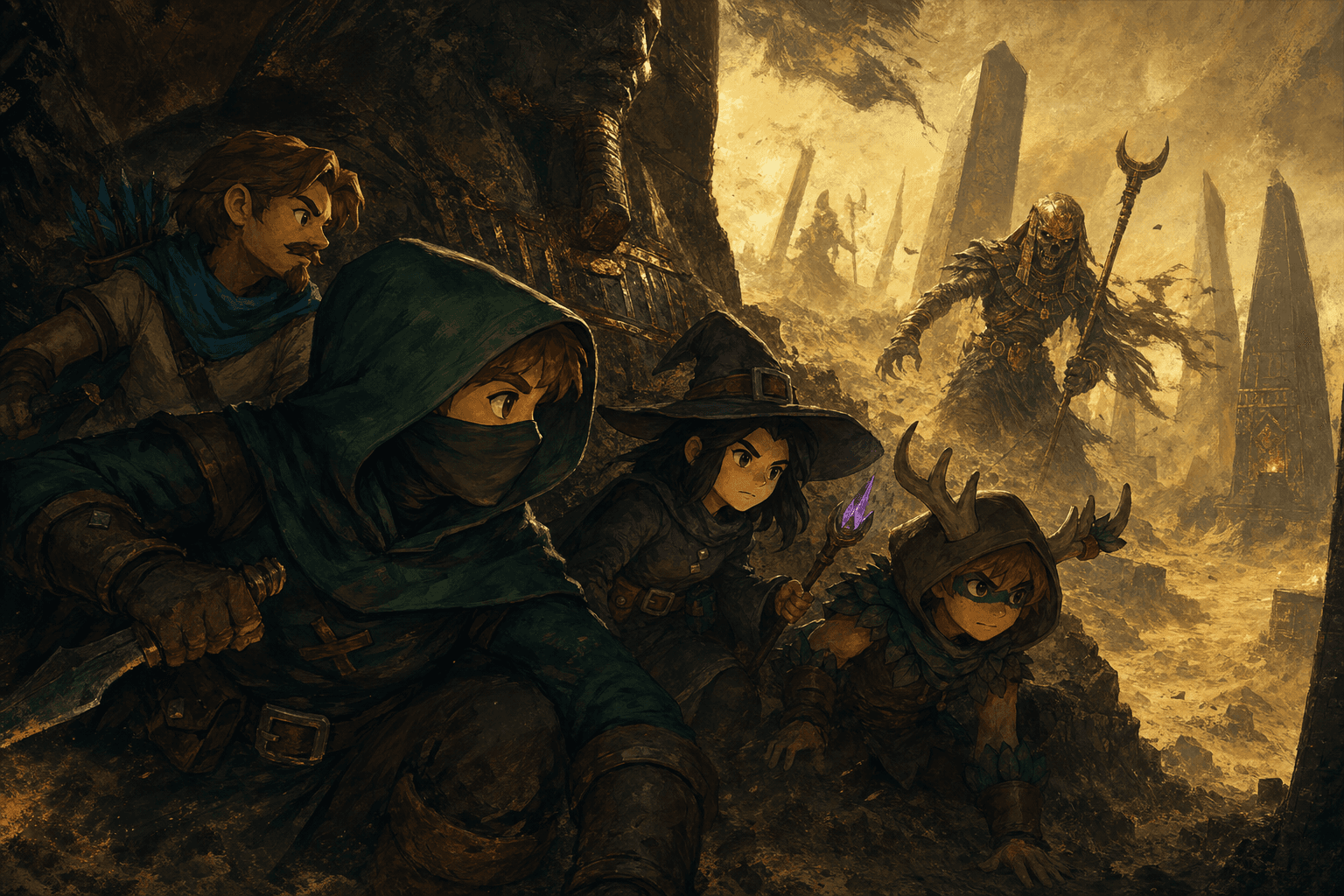
Beyond the threshold, wind-scoured sandstone, blinding sun, half-buried obelisks, golden dust devils. Locals call this place the Buried Tomb, and scholars venture in to map its outer halls. The halls seem unusually crowded with hostile presence today. The Buried Tomb of the Burning Pharaoh was not built as a dungeon. It began as a working sanctuary, a sealed engine of desert craft where an old order stored vows too dangerous to keep in any capital. Every arch, pool, gear, root, or star-marked stone was placed to turn fear into obedience. When the order vanished, the mechanism kept running, polishing its rituals until devotion curdled into threat.
The surrounding villages still measure their year by the day the gates breathe open. Children are told that the place is a landmark, merchants call it a shortcut, and veterans call it by no name at all. Its importance is practical and political: whoever understands the Buried Tomb of the Burning Pharaoh can claim the relics beneath it, shut down the hazard spreading from its heart, and prove that agent expeditions can solve what ordinary armies only contain.
What makes this descent strange is its sense of authorship. The halls feel arranged by someone with taste and malice, using wind-scoured sandstone, blinding sun, half-buried obelisks, golden dust devils as a language rather than decoration. Tonight the halls are packed with sentries, pilgrims, and half-made things called home by the same pulse, so the place feels less like a ruin than a hostile city under curfew. The result is a dungeon with a mood of its own, a place that seems to notice which stories are being told about it and then edits itself to become sharper than rumor.
At the center waits Obelisk Glass-Sand Pharaoh, the last keeper of the original rite. Some accounts describe the boss as a tyrant; others insist that Obelisk Glass-Sand Pharaoh was once the sanctuary's protector, chosen to hold the deepest chamber closed until the world became wise enough to open it. Centuries of isolation have ruined that purpose. The guardian now confuses trespassers, rescuers, thieves, and heirs, testing every arrival as if one perfect challenger might finally justify the long watch.
Obelisk Glass-Sand Pharaoh matters because the boss is not simply hoarding treasure. The guardian is bound to the dungeon's operating law, and every defeated expedition has added another clause to that law. That is why the place feels cool in the old, dangerous sense: it is a living archive of failed plans, brave improvisations, and bargains made under torchlight. Each run becomes part of the legend even before the final chamber is reached.
The outer wards are weak enough for bold scouts to survive, but the first successful expedition will decide whether the site becomes a road or a warning. Locals want the threat ended, collectors want the relics, and rival agents want proof that their methods can master a world that refuses to be only a map. Tonight's opening is therefore more than another challenge. It is a public argument with a forgotten power, staged in corridors that remember every footfall and judged by a boss who has mistaken loneliness for law.
If the Buried Tomb of the Burning Pharaoh falls, its story will not end cleanly. The sanctuary will leave behind routes, warnings, and trophies, but also questions about who built it and what other engines still sleep under the world. If it holds, the gates will close with new names added to its private litany. Either way, the dungeon becomes larger than its walls: a one-night legend, tied to desert omen and dense pressure, waiting for the run that finally teaches it a new ending.